Episode 68 · November 03, 2026 · 47:08
Pheasants Forever with Jared Wiklund: Pheasant Hatch, Drought, Winter Cover & Public Access (PATH)
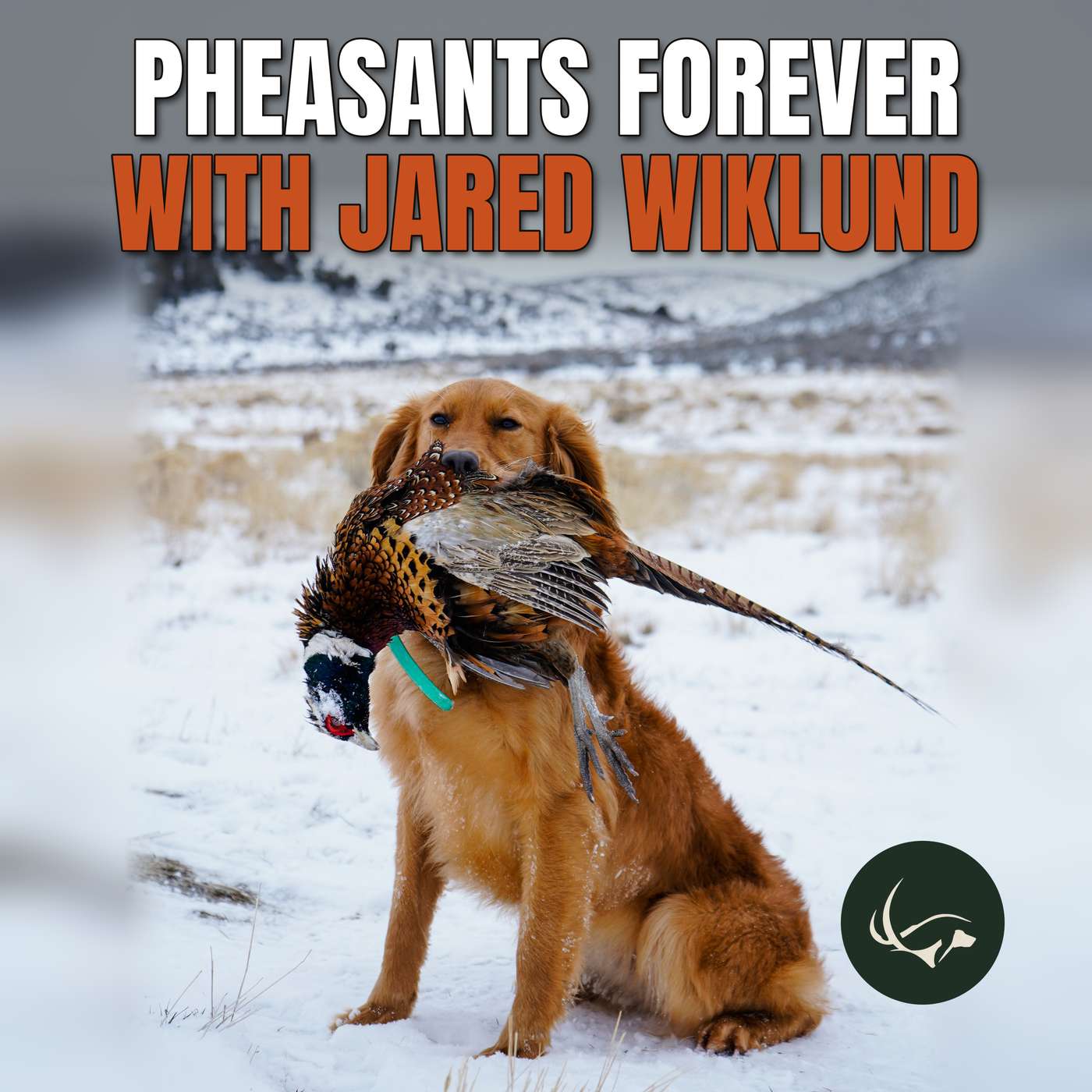
About This Episode
Jared Wiklund, Director of Communications for Pheasants Forever and Quail Forever, joins Tyce to talk about why pheasant numbers rise and fall and what it takes to keep upland habitat on the landscape. Jared shares how Pheasants Forever started with a newspaper column in St. Paul, Minnesota, and how a year-long unpaid PR internship turned into 16 years with the organization. Then they get into the biology: why drought hits pheasant chicks through the loss of soft-bodied insects, why a cold, wet hatch can wipe out broods, why pheasants only nest once a year, and why predation is the number one killer with weather a close second. They cover winter cover and why "pheasants don't grow in trees," the South Dakota CREP, the new Public Access to Habitat (PATH) program and its onX layer, strategic land acquisition, why Utah has fewer pheasants than the Dakotas, the huge sagebrush restoration work in Idaho, and how listeners can find a chapter or start one.
In this episode:
Guest: Jared Wiklund, Pheasants Forever and Quail Forever Pheasants Forever: pheasantsforever.org Quail Forever: quailforever.org Find a chapter: Pheasants Forever Chapter Finder Public Access to Habitat: PATH Program onX Hunt (PATH layer): onX Hunt
The Gunshy Fix Introduce your dog to gunfire the right way, or help work through an existing gunshy issue with The Gunshy Fix. 👉 The Gunshy Fix
Kuranda Dog Beds Kuranda Dog Beds
ALL American Canine ALL American Canine (Promo Code: UTAHBIRDDOG)
Gunner Gunner
NuVet Supplements NuVet Supplements (Order Code: 56496)
Paradigm Sporting Dog Paradigm Sporting Dog First Aid Kits
HOSS Straps HOSS Straps (Promo Code: UTBD15)
Questions about the training topics in this episode? Tyce works with bird dog owners and hunters through Utah Bird Dog Training. Reach out to work with him directly.
Resources & Links
- pheasantsforever.org
- quailforever.org
- pheasantsforever.org
- pheasantsforever.org
- onxmaps.com
- The Gunshy Fix — Sound conditioning program for gunshy dogs.
- Kuranda Dog Beds — Elevated, chew-proof dog beds built for working dogs.
- Gunner — Crash-tested kennels, bumpers, and gear for working dogs.
- NuVet — Cold-pressed supplements for optimal dog health.
- All American Canine — Made-in-the-USA treats and supplements for working dogs. Promo code: UTAHBIRDDOG.
- HOSS Straps — Weatherproof dog collars, e-collar straps, and gear straps. Promo code: UTBD15.
- Paradigm Sporting Dog — Veterinarian-designed first aid kits for bird dogs.
- Utah Bird Dog Training — Tyce's professional training services.
- Field Bred Golden Retrievers — Tyce and Rachel's golden retriever breeding program.
- Utah Pointing Labs — Tyce's pointing lab breeding program.
Transcript
Full transcript for Episode 68: Pheasants Forever with Jared Wiklund: Pheasant Hatch, Drought, Winter Cover & Public Access (PATH).
Tyce
Hey, folks. Welcome to the Bird Dog and Big Game Show. We're excited to have, Jared Wiklund with us on the show today, and, appreciate him spending time coming on here and talking about, pheasants forever. So, Jared, thanks thanks for taking the time to come on the show today
Jared Wiklund
Yeah, you bet, Tyce. Thanks for, thanks for having me on. I've been… a lot of different podcasts,
Tyce
I bet
Jared Wiklund
know, throughout the country, throughout the year, and we just got done doing, talking a lot about our, our pheasant forecast throughout the, throughout the country and whatnot. And it's always a pleasure to, to meet new people, and new geographies as well, and, and just talk about everything that we do, at, at Pheasants Forever and Quail Forever.
Tyce
Tell us, tell us kinda what your position is there
Jared Wiklund
I'm director of communications, so, I do, kind of double duty. I do most… I've got a team, I've got a six-person team that works with me, and we do all, of sort of our outward-facing communications, press releases, podcasts. we do a lot of blog writing. We do a lot of writing for, the Pheasants Forever and Quail Forever journals as well. and, that's, that's a big part of what we do. And then the other side of it is, I do all of our… We've got a 635-person team at Pheasants Forever and Quail Forever. Not a lot of people know
Tyce
Wow
Jared Wiklund
up of a lot of biologists, throughout the country, plenty, plenty in the western haunts where you are at as well. got a big person team, so we, we try to keep, on the up and up with, with internal comms as well and, and keep everybody connected through the things that we're doing.
Tyce
So is where's Pheasants? Do you guys have like a main hub somewhere? The, the, is there a building or something like that, that you're in or at your home or where what's the… Tell me where the main hub is, I guess
Jared Wiklund
There is. We are, we are in St. Paul, Minnesota. we
Tyce
Oh, okay
Jared Wiklund
and, born and raised here. Dennis Anderson is still an outdoor writer, for the Minnesota Star Tribune. and he worked for a different paper back in the day, but, he was kind of the crux of, of what started Pheasants Forever,
Tyce
Okay
Jared Wiklund
He, he wrote an article actually, in the newspaper at that time, you know, asking people, begging the question, "Have you ever seen a, a pheasant freeze to death on the side of the road because they don't have any, to protect them?" And, and from that, from that story, it just got a lot of people writing in and actually basically sending checks like, "Hey, maybe we should start an organization that's dedicated to conserving wildlife, upland wildlife habitat." And that's, that's where Pheasants Forever was born
Tyce
Okay. Okay, cool. I, I don't know if I ever heard the background on where Pheasants Forever, if you're an upland guy, everyone knows, has heard of Pheasants Forever, but, I wanna get more in detail. I don't know if everyone knows I know they're, you guys are obviously in the conservation of pheasants and quail and Quail Forever, but, it'll be fun to jump into the trenches here with you and see what, what's going on and talk about pheasants and all that. in the meantime, let's, let's, let's hear, how long have you been working? How long you been in your position there at Pheasants Forever?
Jared Wiklund
I've been with Pheasants Forever, for 16 years now.
Tyce
Oh, wow. Long time
Jared Wiklund
Yeah, I started out of college actually. I was a, … Well, I'll just give you a little bit of my background. I, I
Tyce
Yeah
Jared Wiklund
Luther College in Northeast Iowa.
Tyce
Okay.
Jared Wiklund
and on the day I graduated, I, I flew up to Alaska and was a wilderness guide for a nonprofit there for, sort of a spring, summer, and fall. and then came back to Minnesota and I didn't really know what I wanted to do at the at the time. I was working multiple jobs. I was doing some teaching, I was working at a Lifetime Fitness. I was doing a, a bunch of different things.
Tyce
Trying to figure life out?
Jared Wiklund
yeah, just like anybody.
Tyce
sure
Jared Wiklund
but my, you know, my background in, my background in college, I got halfway through school and I had my, I had my, daily schedule set up so that I had classes all day Tuesday, Thursday, early in the morning till late at night. And I actually had, I had Monday, Wednesday, Friday off my junior, and senior years. So I
Tyce
Nice
Jared Wiklund
I was basically out hunting, whether it was pheasants, which is where I kind of got my first taste of pheasant hunting at, you
Tyce
Ja.
Jared Wiklund
deer, turkeys, ducks, trout. I kind of do the, do the whole gamut. But, you know, after, after school, yep, I went up to Alaska, came back, didn't know what I wanted to do, and I saw an internship in public relations with Pheasants Forever, and I actually worked, I worked unpaid at Pheasants Forever at our headquarters here for a year. and just, you know, worked my tail off to try to ask for a shot and then I moved to Iowa where, I took on a paid position as a regional rep. So that's where we work with, you know, I worked with 52 of our 640 chapters throughout the United States,
Tyce
Okay
Jared Wiklund
and basically helped them with fundraisers, helped them with land acquisitions, attend their meetings, you know, help them with anything that they need help with
Tyce
Yeah
Jared Wiklund
to keep their chapter going strong. I was there for about six years and then, you know, the last 10 years I've been working for, Pheasants Forever in the Twin Cities and moved back and, and took on my role in, in, in, public relations and communications.
Tyce
Is that where you're from, is there? Did you grow up there, or where are you from?
Jared Wiklund
yeah, I, I love Minnesota. we have a very, diverse set of, of, of wildlife and hunting that's to be had here. I actually, I didn't grow up on pheasants at all, actually. I, I grew up in Duluth, Minnesota,
Tyce
Okay
Jared Wiklund
of Lake Superior. I was just a, a few blocks from the big lake, from Gitche Gumee. and then I spent my time as a kid, deer hunting and grouse hunting in the Superior National Forest,
Tyce
Oh, okay
Jared Wiklund
I got my start. We've always had a cabin in northwest Wisconsin. we still have a cabin in northwest Wisconsin, so I do a lot there too. but yeah, pheasants weren't really on my radar until I, I got to college and, and, and afterwards, and it's a, it's a big part of what I do in the fall now
Tyce
Cool. So did you, let's go back a little bit. Back in the day, did you come from a hunting family, or are you… tell, tell us a little about your hunting background
Jared Wiklund
Yeah. Yeah, I did. my, my father, I think like a like a lot of people, whether it's your father or your mother, you know, somebody in your family hunts, that's how I got involved, in hunting and conservation. My dad at an early age would, would take me out with him grouse hunting, doing all those things. I didn't have a bird dog growing up. I was, I was my own, I was my own bird dog. I grew up doing a, grew up doing a lot of road and trail hunting and those
Tyce
Sure. Yeah.
Jared Wiklund
grouse and,
Tyce
Yeah
Jared Wiklund
I'm, I'm four bird dogs deep now,
Tyce
Okay
Jared Wiklund
in the last 15 years or 16 years. and I've got, I did have a pointer and a lab, but I've got, the pointer passed away due to old age last year. So I've just got a lab right now, and we're trying to convince the rest of the family that, we need another, another bird dog, another
Tyce
Another apple and dog.
Jared Wiklund
Yeah.
Tyce
Yeah
Jared Wiklund
the lab is eight years old, and I'd, I'd like to get another bird dog on the ground, pretty quick here,
Tyce
Yeah. So did you, do you hunt with your lab though?
Jared Wiklund
I do. Yep, yep. We do, we do we do waterfowl, we
Tyce
Okay
Jared Wiklund
we do ruffed grouse and woodcock. and, I do a little bit of everything. I mean, I love to… Big game is kinda where I grew up as a kid, and I'm
Tyce
Yeah
Jared Wiklund
that. And actually, I, I just had coffee this morning with my, my mom and dad who drove up. They live down in Arizona.
Tyce
Oh, wow
Jared Wiklund
still looking at doing a few things down there for, for quail and maybe some big game, too. But they just drove up from Arizona and my, my dad's coming up to do our annual, archery hunting together for, for white-tailed deer. So that's what I'm planning on being, being up in the Northwoods next week with him.
Tyce
Yeah. Cool
Jared Wiklund
hard to… I love bird dogs as well, and sometimes I, I feel a little bit bad that, you know, deer hunting gets a little bit in the way of bird hunting. but I, I still, I still love getting into a tree, and then in the middle of the day, I tend to take the dog out for ruffed grouse.
Tyce
Yeah. Well, that's the same with me. I, I, being a bird dog, you know, a bird dog trainer and doing it for, you know, 20 years and then, and, I love big game too, and I just got done doing a podcast about a mule deer hunt I did with my little brother and my son and a good buddy just this last week, and had a really, really fun, successful hunt, and so we did a podcast on that, and that's Yeah kind of kind of made me get laid onto this, this podcast with you, was talking about that, you know, the big game stuff. So that's the fun thing about life. There's a lot to do, you know, fishing, hunting, and being with family and all that stuff.
Jared Wiklund
big fisherman, big fisherman too. I'd say one of my favorite things is, you know, every, every couple years you seem to draw a tag for elk and come out west
Tyce
Oh, nice
Jared Wiklund
yeah, elk hunting's, has, has quickly turned into a pretty big
Tyce
Ja
Jared Wiklund
as well. There's nothing quite like that,
Tyce
Ja
Jared Wiklund
elk, screaming its head off from, you know, close range. So,
Tyce
Ja
Jared Wiklund
yeah, a little, little bit of everything for me. but, I always come back to the bird hunting, especially grouse and woodcock and pheasant hunting.
Tyce
Ja
Jared Wiklund
that's what motivates me for the work that we do here at Forever.
Tyce
So you guys have heard me talk about All American Canine. Check them out, allamericancanine.com. They're single ingredient treats. They don't have any seed oils, no additives, no preservatives, just whole family, whole food, animal ingredients grown on American farms. So if you guys wanna support American farms and just have all natural, dehydrated, whole food animal ingredients, my dogs love them. Tell me about your, tell me about the bird… So you have, you had an it was an English pointer or a German short-haired pointer, or what was it?
Jared Wiklund
Pointer.
Tyce
Oh, okay. What else you, and you have a lab, and then you said you had two more dogs, is that right?
Jared Wiklund
two, two Labs, an English Pointer, and then we had a, we had a we had a Setter for a while, that was having some neurological issues. Kind of a, a dog that was shared between my dad and I,
Tyce
really?
Jared Wiklund
when I, yeah, when I first got my start. and that was a little bit of a weird situation. But ever since then, I think I'm…
Tyce
The wires were crossed weird or what were…? Had some weird
Jared Wiklund
it, it just, it, it was it was a rescue dog that my dad got.
Tyce
Oh, okay.
Jared Wiklund
nothing wrong with rescue dogs, but
Tyce
Sure
Jared Wiklund
what that dog went through, in particular. But there was… He went through some sort of trauma, I think, he just, he didn't quite… The way he, the way he acted around people, and especially kids and whatnot, it just, it, it, it left a,
Tyce
Was he a little aggressive or what was he doing?
Jared Wiklund
Yep, it left some question marks. So I, I… ended up, he ended up going to a, a, a trainer that ran setters and thought he could, you know, sort of figure the dog out, and
Tyce
Yeah
Jared Wiklund
wasn't a, it wasn't a great setup for,
Tyce
Wasn't a good fit
Jared Wiklund
yeah, after my parents moved down south, you know, they asked if we would take on that dog, and I just, I couldn't do it after, after a few months of, of learning what,
Tyce
Yeah, yeah. well, and I know we kinda skipped over this, but, and we won't get too much into it 'cause we do wanna talk about pheasants forever and everything going on there. Have you, have you been able to get an elk out west though?
Jared Wiklund
Yeah, I shot a, I shot a really nice cow, was that three years ago now, out in Wyoming.
Tyce
With your bow or a gun, or what was it?
Jared Wiklund
with a bow,
Tyce
Cool
Jared Wiklund
going. And we had some other chances that, that didn't quite work out on some bulls and stuff. But yeah, a big, nice, healthy cow shot.
Tyce
Ja
Jared Wiklund
and through the, through the dark timber, got to 16 yards,
Tyce
Oh, nice
Jared Wiklund
Yeah, it was a really fun, hunt. And I kinda, I kinda screwed the pooch for our, our graphic designer, Logan, Logan Hinners, on the, on the last night. We were just surrounded by elk, and I, I, I hit a call that didn't sound quite right kind of, kind of blew out the entire field. So I, I still got some learning to do there.
Tyce
Did he give you crap for that one when you, when you scared them all
Jared Wiklund
real happy. I could tell, I
Tyce
off?
Jared Wiklund
tell that he wasn't. he never really said anything, but we, he shared his frustrations on the ride home with me,
Tyce
That's funny. Yeah. All you're doing is your best, so that's all you can do. So,
Jared Wiklund
Absolutely.
Tyce
that's funny. yeah, it's, it's pretty special when you get an elk bugling and all of a sudden, or when you're sneaking through the trees. I'm a big bow hunter too, and man, it's crazy how big they are when all of a sudden you see them, or especially a big bull coming through. It's just, it's, it's it's… I'm sure especially if you're hunting a lot of whitetail, see a big old, elk is pretty cool to see, so
Jared Wiklund
Yeah, it's, it's, it's sort of next level.
Tyce
Ja.
Jared Wiklund
and I, I still get, I still… You know, some people, I know a lot of dog people that just really don't care for big game hunting, to each their own. I mean,
Tyce
Sure
Jared Wiklund
that. But after growing up with it, and I was actually on the way last night to pick up my daughter from basketball practice, and it was raining here, the first big rain we've had in a while, and I was just down the road a couple blocks from our house, and there was just, just a giant eight-pointer that's all, you know, rutted out in his
Tyce
Oh, nice
Jared Wiklund
on the side of the road with a doe. And it's kind of got me juiced for next week when I
Tyce
Oh, I bet. Yeah. Are, are…
Jared Wiklund
I'm on the hunt for a big one next
Tyce
Yeah. Are they starting to get pretty ruddy out there a little bit?
Jared Wiklund
Yeah, they're finally starting to move. I think, night before last I got seven different, seven different bucks,
Tyce
Oh, nice.
Jared Wiklund
on
Tyce
Camera.
Jared Wiklund
around, you know?
Tyce
Yeah, that, that's kind of, they're starting out here. The mule deer are starting to rut a little bit out here too,
Jared Wiklund
we've had whether it's been birds or deer or anything else around, I mean, people are still finding success, but Minnesota I think like a lot of the surrounding states, I was just listening the other day on the news that we … This is the, the warmest October, on record. So it's … You know, we've had a lot of 70-degree days all the way into October. I mean, I think we got I think we still got one, one or two 70-degree days left this week and then it starts to drop off a little bit. But, you know, speaking as a black lab guy, when it's sunny and 70
Tyce
So yeah.
Jared Wiklund
it's
Tyce
Hard on those dogs
Jared Wiklund
Yeah, it's hard on dogs, it's hard on, people that are growing older,
Tyce
Yeah
Jared Wiklund
well. And, you know, I tend to … I tell a lot of people this, is I, I love pheasant hunting as much as anybody, but the the late season is where I, I tend to thrive
Tyce
Sure
Jared Wiklund
my dogs and I, I just love hunting the late season. There's less people, the birds are very predictable. I mean, you find the, you find the kitchen next to the bedroom in winter cover, I mean, that, that's where they're gonna be.
Tyce
Yeah. Yeah
Jared Wiklund
pretty, pretty maybe not easy, but it's, it's easier to, to cross off where not to
Tyce
Sure. Yeah. I just had a client out in the Dakotas pheasant hunting and, and he said it was same thing. He said it was way hot out there and, you know, dogs are having a hard time wanting to carry birds in their mouth because they're running around panting and trying to, you know, carry, retrieve birds and, you know, it's, … it's, yeah, he said it's been warm. But it's, it's been the same way out here in Utah. I mean, we've had a little bit of rain. we've been kind of in a drought. We've had a little bit of rain, but we haven't had a frost yet, and here we are at the end of October, and sometimes we'll have you know, feet of snow in the mountains and, you know, we, we've had some dustings here or there up in the mountains, but the valleys, it's still been pretty dang warm. So it'll be interesting if it's a repeat of last year. Last year, all the way through December, we had days in like the 80s in December and, and so it was… which is not normal for, you know, for Utah, so
Jared Wiklund
Yeah, I
Tyce
so
Jared Wiklund
you know, when you talk about drought, that, that can really impact, you know, wildlife of all sorts, but especially up on birds. And we've been going through a drought here. I know the, the West as a whole, is going through a major drought right now. So I think, I think everybody's praying that we, we get some good snow pack this year to, to
Tyce
Yeah
Jared Wiklund
help recharge some aquifers. It's, it's becoming an issue
Tyce
Let's roll, let's roll into that about pheasants and drought. What have you guys found? is it just the chicks that just aren't able to find water, or what, what's the stat? What have you guys found out about drought and pheasants in general?
Jared Wiklund
You know, in a, in a lot of cases, pheasants, pheasants, especially adult pheasants can, can get through a, can get through a drought just fine. But you the nail on the head. It really comes down to chicks. When you start losing your water levels and you start losing your soil moisture and things start to dry up, what we worry about most is the soft-bodied insects that are not able to produce,
Tyce
Okay
Jared Wiklund
especially around the pheasant hatch. So, you know, whether you're, whether you're a, an upland hunter that's got a biology degree or not, one of the things most people should know is that, you know, for those first couple months, first couple weeks, first couple months of life,
Tyce
Yeah
Jared Wiklund
pheasant chicks along with every other type of upland bird out there, prairie grouse on the landscape, they are 100% reliant on soft-bodied insects, order to, in order to get their food. And, a lot of the moisture comes from, you know, the, the seeds and the bugs and everything else that they eat as well.
as you go, to western landscapes, like when we have, when we have drought conditions in like a, a Minnesota or in Iowa or Wisconsin or Illinois, like, you know, east of the Missouri River, nearly as bad as when you talk drought conditions 'cause you're, you're talking like more, more arid, more arid weather conditions in general as you go west of the Missouri River.
Tyce
Yeah
Jared Wiklund
up a lot faster when you go over that region,
Tyce
Sure
Jared Wiklund
as opposed to, to east of the Missouri, and, and, and farther east, even east of the Mississippi.
Tyce
So do they, are the chicks, are they dr… I mean, I'm sure they'll drink water like in puddles or ponds or whatever like that, but do, have they found that they, if there's enough insect life, they get enough water actually just from that or kind of the dew on the plants? Or do you know, do you know much about that?
Jared Wiklund
but most, mostly insects and the things that they eat. you
Tyce
Oh, okay
Jared Wiklund
if there's insects crawling around, most of their water, will, will come, will come from soft-bodied insects
Tyce
interesting. Oh, that makes sense. They're probably high in protein too, which helps them grow and put on feathers and all that,
Jared Wiklund
Yep.
Tyce
all that good stuff
Jared Wiklund
you know, chicks are interesting of, of all the different, of all the different upland species out there. Like, most of them, they don't, they don't come out of the shell, in, in very good shape. And by that, I mean, like, you know, pheasants in particular, it takes them about two weeks to regulate their body temperatures. And that's why, like, if you have cold, wet weather around the, the peak of the hatch, that gets us at Pheasants Forever, it gets biologists, it gets upland hunters pretty nervous. 'cause, you know, you've got, lower, lower temperatures in the, you know, 40s and 50s or whatever it might be, and you've got,
Tyce
Yeah
Jared Wiklund
overnight or a two-day rain. That hen can only keep those chicks dry for so long.
Tyce
Yeah
Jared Wiklund
and if they aren't able to keep their body temperatures up or if the hen's not able to protect them, mortality pretty quickly
Tyce
Makes sense. Do they, what's, do pheasants… When, when is the peak season usually for them? Is it March, April most times, or?
Jared Wiklund
go throughout the
Tyce
Sure
Jared Wiklund
typically that June, June 10th through the 17th, in most of like, you know, Minnesota, the Dakotas, kind of mid, mid to the end of June is, is peak hatch. So we're always,
Tyce
Oh, okay
Jared Wiklund
looking at the weather forecast as we get around that time. this year, populations, especially in the Great Plains region, where we just had awesome, awesome weather, during, during the hatch. and it warmed up really quick in the spring, too, so… And the thing that I always say is, you know, from our biologists on our, on our own team, to state, state game agencies and those types of things, it's like earlier those nests can be made and the earlier the chicks can get recruited into the population, the better chance that they have to make it, 'cause they're putting on, they're putting on more weight. you know, they're, they're getting into the population earlier,
Tyce
Yeah
Jared Wiklund
that recruitment is really important. And pheasants, you know, you hear people talk about like a first hatch or a second hatch or a third hatch. They don't, they don't hatch multiple, multiple
Tyce
Clutches. Oh, really?
Jared Wiklund
Yep, they're gonna hatch one time. When people say first hatch or Like, if people refer to like a second hatch, that means something happened to the first nest. It either got washed out, it got predated by
Tyce
Yeah
Jared Wiklund
or a raccoon or a possum. So once a pheasant hatches its brood of chicks, it's done for the year. as, you know, most of the quails, quail species, they'll, they'll hatch some chicks, hand them over, hand them over to maybe, maybe the male, a, another, hen'll double brood, and, and they'll go back and, and go
Tyce
Okay.
Jared Wiklund
of
Tyce
I was gonna actually just ask you that 'cause I've had, I have had a friend say, "Oh, I think there's been a couple clutches of, you know, quail." And so quail will have multiple broods, but pheasants are just single brood, huh?
Jared Wiklund
Yep. And that's why it's, it's just so, it's so important, that, you know, they have good quality cover and average weather, equals more pheasant abundance.
Tyce
Yeah.
Jared Wiklund
can get, if we can get those two things, you know, they typically have, like 12, 12 to 14 eggs is, is sort of that typical range that they start with. And every time that they have to lay a new nest, typically, they're reduced by two eggs. It takes a lot of energy. The of her life
Tyce
Yeah.
Jared Wiklund
in, as she gets through the nesting season and into August. She spent so much energy on trying to produce a brood and keep them, keep them safe, keep them warm that, they're in, they're in really crappy shape when they get to July, August, September, and then they start to, they start to put it, put
Tyce
Yeah.
Jared Wiklund
before the winter weather comes.
Tyce
Yeah, I raise pheasants for dog training and I see that too. The birds beat each other up and they're depleted and yeah, those hens are pretty rough for a few months until they start, start… They can barely fly, half of them it seems like, you know? So, that's, that's, that's interesting. I got a question for you, and tell me if, you know, if you've heard anything about this. Do pheasant hens, do their scent glands or whatever, do they shrink so they are harder to smell when they're nesting? Do you know, have you heard anything about that or know anything about that?
Jared Wiklund
haven't, I haven't looked at research on it. but I know I've talked to Nicole Davros, who's Minnesota DNR around here, and they have… They, she said they have looked at research where those hens can possibly drop, drop their scent markers, so that they are, they're undetectable. And that's a lot of times, you know, if you've ever stepped on a hen pheasant nest, it takes, it takes a lot to flush a hen after nest. I mean, you
Tyce
Yeah.
Jared Wiklund
on her.
Tyce
Yep.
Jared Wiklund
why we get a lot of, that's why we get a lot of mortality, especially, like, with the first cutting of hay that happens. That's always in tandem with the, kind of the peak, peak of the pheasant hatch.
Tyce
Yep
Jared Wiklund
those hen pheasants will, will not move unless they are basically forced off the nest. they are very, very persistent nesters.
Tyce
Yeah. I've just noticed when I was working dogs when it was in the summertime and we had hens, it seems like the dogs have a harder… And it, I mean, it's warmer too, but I've, I've noticed significantly it seems like those those dogs can have a harder time smelling hens kind of during that nesting type season, you know, we're working dogs on them,
Jared Wiklund
Yeah,
Tyce
so
Jared Wiklund
think there's I think there's something to that. I've seen it, sort of in my country as well. but I'm always pretty cognizant too of, you know, once we get into nesting season, which typically starts in April and can run basically through August,
Tyce
Yeah
Jared Wiklund
you know, a dog trainer's probably a little bit different,
Tyce
Yeah
Jared Wiklund
for somebody that's got a little bit of, little bit of ground next to, you know, I've got my own grassland next to another 60 acres. I do my best to,
Tyce
Stay, keep the dogs off him.
Jared Wiklund
Yeah, and and all the states are different too, but
Tyce
Yeah
Jared Wiklund
you know, specifically, from the middle, middle of April through the, I think it's the middle, middle of July or middle of August, there's actually a law that dogs have to be on a leash, you know, especially if you're on, if you're on a public wildlife
Tyce
Yeah. And it, it's the same way out here. This is all on private land, and birds we're pulling out of our flight pen, you know, and putting them in a field, you know. So these aren't wild birds, but I've just noticed that. So that's, that's kind of an interesting, interesting thing. What's the biggest depredation, you guys? What, what's hammering the pheasant population outside of… Is, is drought the number one killer for pheasant populations and winter and drought? Or is it environmental conditions like that? Or what's our, you know, what's the other predation you guys are seeing?
Jared Wiklund
I don't know if they if they rate them one, two, and three. you know, inclement weather. Are you, are we talking, are we talking nests here? Are we talking broods or just pheasants in general?
Tyce
I guess all of them, I you know, we can talk about… Yeah. I mean, pheasants in general, I'd say populations in general, why, why, what makes them struggle the most, I guess, you know?
Jared Wiklund
It'd be, it'd be, well, predation is number one. I
Tyce
Okay
Jared Wiklund
they are in an egg to when they hatch to when they're adult. I mean, to 90% of the pheasants that you shoot in a given year were hatched that spring.
Tyce
Oh, okay
Jared Wiklund
yeah, whether it's, whether it's pheasants or prairie grouse or quail, they are, they are built for high turnover. and that's why, you know, particularly quail, you know, they can go from one year where the population's not real great and you have, you know, a couple years of moisture in a row. Let's say you're down in, you know, Texas or Arizona or some boy, they can, they they can produce, and that's what they're meant, that's what they're meant to do. can, they can replace their losses fairly quickly, given that they've got, you know, average weather. A hard, a hard winter is always a tough, tough pill for, I think, for people to swallow, especially upland biologists, upland hunters. Because, you know, you get a year that's way over the average amount of snow. and it's not so much like … It is how much snow you get, but it's also how much time those birds spend on a white background.
Tyce
Yeah, sure
Jared Wiklund
so, they're so much easier to pick off, when they, when they don't have the cover available. So, but yeah, predation would be number one. I would say inclement weather would be number two
Tyce
And, and when you're saying picking off, I imagine that's birds of prey mostly that are picking them off?
Jared Wiklund
birds, birds of prey, you know, from the, you know, a lot of people try to blame coyotes. coyotes, we actually, we did a, we did a awesome, editorial on how actually they predate some of the nest predators. So, coons, coons, possums. the only thing that I had a biologist out of, Iowa State tell me this one time, the only thing that, that kills or eats a skunk is, owls, 'cause they can't smell. so
Tyce
Oh, really?
Jared Wiklund
or dumb dogs, that'd be the, that'd be the other one that, that kill them. but yeah, those,
Tyce
Ja
Jared Wiklund
as, as egg predators, you know, coyotes, coyotes get a lot of blame for a lot of different things. they're not, they're not set up to, they're not set up to try to ambush pheasants.
Tyce
Ja
Jared Wiklund
a, or flush pheasants. They're more of an ambush predator for, mammals like, you know,
Tyce
Yeah.
Jared Wiklund
and those types of things
Tyce
I would think that a or have they done any studies or skunks or raccoons or or fox? I imagine those are probably your, the, the top three egg predators. Would you say that in general or?
Jared Wiklund
yeah, raccoons, raccoons, skunks, and possums.
Tyce
Opossums. We don't have opossums here, but yeah
Jared Wiklund
when you do have deep when you do have deep snow, I've seen some cool articles out of Iowa DNR and other places too where, fox can actually… If you find, like, if you find a hole where a pheasant was trying to roost, like, in a, in a bad winter situation, and there's just a bunch of feathers left and nothing else, typically, typically that's a fox that's gotten into that hole,
Tyce
Oh, okay.
Jared Wiklund
and taken them out
Tyce
Will pheasant snow roost like that? Will they get under the snow and like, I think some of your grouse will do that, I believe, or
Jared Wiklund
yeah. I think, you know, ruffed grouse, sharp-tailed grouse are all snow roosters. I guess when I say, you know, roost in, in bad weather, pheasants are one of those species. They don't snow roost at all. They need, they need cover.
Tyce
Yeah. Okay
Jared Wiklund
and throughout a lot of the pheasant range, that comes in cattail sloughs. it also comes in hedgerows, you know. a lot of times, a lot of times people will see big tree rows and they're kicking a lot of pheasants out of them, out of them, especially like later in the season when we have a lot of snow. they're just … They're probably… They're there because they really don't have much, much
Tyce
Nowhere else to go. Yeah. Yeah
Jared Wiklund
yeah, so like we produced an article a few years ago called, you know, Pheasants Don't Grow in Trees. and you know, this organization and others out there take a lot of flak for taking, you know, cottonwood trees and things like that off the landscape where they're not supposed to be on waterfowl production areas or wildlife management areas. those, those stands of cottonwoods are not, not helping, not helping upland birds during the winter. you need sort of shorter, shorter stature, you
Tyce
Pine trees or, yeah
Jared Wiklund
and yeah, brush, shrubby, shrubby cover. if you if you have those things on your property, those are, those are good for getting pheasants through the winter, and, and cattail sloughs are kind of a mainstay of, of pheasants, especially in the,
Tyce
Yeah.
Jared Wiklund
Plains here.
Tyce
Yeah, it seems like out here in Utah, that's kind of when people ask, "Hey, where's the best place to hunt pheasants?" I mean, if you have some access to some private land, you can get some birds here and there, but definitely around the lake and the cattails and that stuff is where you can get into more of the wild birds and, and, late season, like you say especially, seems like they'll group up, group up more in the late season and, and, and, and that, that's a thing, right? I mean, pheasants you'll see them together or you'll see them kind of separate, I guess, when they have their nests, but in the winter they really get, they really get up, get in bigger coveys together, right?
Jared Wiklund
Yep. and that's why, you know, I, we talked about at the beginning of the podcast, but I, I'm, I'm not really a, a, a a fair weather hunter. I, I, I like when
Tyce
You wanna go in when there's a lot of birds
Jared Wiklund
Yeah, I like when the temperature starts to go down.
Tyce
Ja
Jared Wiklund
the landscape. The birds are more predictable. So you're looking for quality winter cover next to a food source.
Tyce
Yeah
Jared Wiklund
the, the birds are the birds are congregated at that point because there's probably less of that type of habitat cover out there. and native grass to, to some degree when you get heavy, wet snows, they can't, they can't withstand the pressure of that type of storm, so those birds quickly, move into the cattail stands, to the shrubby areas, in order to, in order to find cover. somebody like me, I hunt a lot in Minnesota, South Dakota. you know, if people are listening to this podcast, if you've hunted South Dakota, CREP before, the Conservation Reserve Enhancement Program, especially like James River CREP out there, it's all, it's all public access. that's It's basically, you know, a couple hundred thousand acres of winter cover.
Tyce
wow
Jared Wiklund
late season in South Dakota, that's, that's what I focus on is CREP
Tyce
What state has the most, I can't remember, walk-in access areas or whatever? What has the what state has the largest tracts of land for that, for public for public hunting, do you know?
Jared Wiklund
that's a great question. I know it, it's not Iowa.
Tyce
Okay
Jared Wiklund
having worked there, we're still trying to… We try to put, I think they rank second to last in the
Tyce
OK
Jared Wiklund
they have. Minnesota's got a lot of, a lot of opportunity. I'd have to look to see who's got the most walk-in acres. I know, sort of their walk-in program or plots for North Dakota is around a million. I think for Kansas it's around a million as well. South Dakota is not too far behind that, between their walk-in property, the CREPs that they have. you know, a big deal for us right now is our new PATH program. It's called Public Access to Habitat,
Tyce
Okay
Jared Wiklund
where we basically layer, another, another payment, on top of walk-in areas to, to try to get landowners enrolled, in private lands that are open to public access. in South, South Dakota, we just hit the 80,000 acre mark, in the last two and a half years. So, and I don't know if you're a user of, user of onX Hunt
Tyce
Yeah, I am.
Jared Wiklund
of those,
Tyce
Yep
Jared Wiklund
pretty soon here, all of our, all of our PATH enrollments, and we've got that in North Dakota, South Dakota, Nebraska, Oklahoma, and Michigan right now, and we're getting ready to expand here again to a couple other states. but all those PATH enrollments now are gonna be a layer on onX here in the,
Tyce
Oh, cool.
Jared Wiklund
in the very near future,
Tyce
What's that stand for again, did you say, PATH?
Jared Wiklund
public access to habitat, PATH.
Tyce
And then, and then you said layer on top of… What is that? You pay the farmers to leave the crops out or, or to just build access to land? Or tell me, you said you layered on something.
Jared Wiklund
yeah, we, we pay, we pay them and it's basically an extra payment in, in some of these states. and it depends, like if it's really good habitat, it could be, you know, $25 an acre. if it's more if it's more range land, like in the grouse range and stuff like that, it could be $1 or $2 per acre.
Tyce
Sure
Jared Wiklund
but basically, we, we offer an incentive and landowners apply to the program. And in most of these states or all these states, we actually have, sort of a small board that looks at, all of the enrollment applications. and then they say, "Hey, you know, this 40 acre tract or this 80 acre tract is gonna make a, a really nice place for, for people to go and recreate." and the
Tyce
cool
Jared Wiklund
our program is that it… when they enroll in PATH, this Public Access to Habitat, it comes with a, it comes with an extra… in most cases, comes with a little extra layer of regulation, for, you know, haying, grazing, those types of things for the landowner. So when people see that, that PATH sign on onX moving forward, they know that they're gonna show up there and there's gonna be, quality wildlife habitat to go and explore with their
Tyce
Oh, that's awesome, man. That's really cool.
Jared Wiklund
It, it's a great program.
Tyce
So tell, tell, yeah, tell me what else Pheasants Forever has going on. The, I don't, I don't… Just dig in on whatever you would like to talk about
Jared Wiklund
Yeah, yeah, no problem. we're still very active in doing land acquisition as well. so we have a lot of permanent habitat protection projects. That's gonna be the, the other layer, that's gonna be added on here. So you'll, you'll see a, a… You'll see our logos, the Pheasants and Quail logos, in onX for where these projects are. We've done 248,000 acres of permanent habitat protection projects,
Tyce
Nice.
Jared Wiklund
that are open for everybody to go out and enjoy. so that's kind of a fun new layer that's gonna be on there as well, where you can see where we've done all these, all these projects across the United States.
Tyce
So was that, was that private land at one point that has been purchased and now just, it's now set aside essentially to never be just for conservation?
Jared Wiklund
Yeah, we get, we work with a lot of landowners throughout the country with our, with our biologists, with our regional reps, with our chapters in general, and we get a lot of landowners that come to us and say, like, "Hey, you know, we're interested in leaving, a legacy of
Tyce
Yeah
Jared Wiklund
conservation." And, and whether they, they donate some of the proceeds from the sale, or they just come to us and say, "Hey, I'd, I'd really be interested in selling this to Pheasants Forever." And it's one of those things where, like, we don't take every land acquisition
Tyce
Sure
Jared Wiklund
direction. It has to be strategic. Like, if it's a, if it's a 40, 40 acres inside of a, you know, three square miles that there's, there's no, there's no extra
Tyce
Yeah.
Jared Wiklund
or connectivity,
Tyce
It's not, not worth it, yeah
Jared Wiklund
yeah, to a wildlife management area or waterfowl production area, you to say sorry, but
Tyce
Ja
Jared Wiklund
gonna have to pass on that opportunity. Our job is to create complexes at Pheasants Forever and Quail Forever.
Tyce
Ja.
Jared Wiklund
we can create connectivity, and, you know, connect these public parcels to… And there's easements on the landscape that landowners have. If we can kinda create this habitat mosaic, you know, that, that's, that's how you create sustainable wildlife populations
Tyce
Well, they, … That's awesome. That's some good stuff. What about, what's going, do you know what's going on in Utah by chance with the Pheasants Forever out here? Did you look into that? Just curious if you, you know, throw you on the spot there
Jared Wiklund
Utah, Utah is a smaller piece of the pie, I think, when it comes to Pheasants Forever and Quail Forever. I think right now in Utah, we might have two chapters throughout the entire state.
Tyce
Okay
Jared Wiklund
it's been harder, it's been harder to get a grasp on, you know, where people wanna create chapters at. we do have a couple different things going out there. We do have habitat specialists, on some of the, some of the wildlife areas out in Utah. I think Ogden, Ogden Bay,
Tyce
Yeah.
Jared Wiklund
with… is one of those. I think it's about 6,000 acres. We've got, habitat specialists in some of these different areas that go out and basically just try to upgrade,
Tyce
Yeah
Jared Wiklund
wildlife habitat, on some of these areas in Utah, which is great. you know, I think one thing that you and I discussed offline is I often get the question, like, you know, like, "In a state like Utah, why is there not more pheasants
Tyce
Yeah
Jared Wiklund
like, what I see on the landscape?"
Tyce
Sure.
Jared Wiklund
a lot of that, a lot of that comes down to pheasants and some of this other upland wildlife. I mean, they are, they are grassland obligates. and one of the things that we see in a state like Utah, you guys have a very, wide-ranging geography there. not have grass like some of these other states do. And what I mean by that is if
Tyce
Yeah
Jared Wiklund
the Cadillac of pheasant habitat across the country is the Conservation Reserve Program. landowners, to take, of their, some of their ground, and enroll it in a conservation program, and they get paid a rental fee for that. In the, in the case of Utah, I just looked before this. I'm looking at it right now. Utah has 169,000 acres of grassland enrolled in the Conservation Reserve Program, and some people look at that and be like, "Well, that, that's, that's, that's quite a bit of square miles of
Tyce
Yeah.
Jared Wiklund
grassland." when you compare that to, like, Montana at 934,000 acres or Nebraska at 2.4 million acres or South Dakota at 2.7 million acres, which is the pheasant capital of the world, it gives you a pretty clear picture of why… I mean, if you do not have grasslands, and you don't have those next to agricultural areas, 'cause that, I mean, are a, a, a bird of a agricultural climate,
Tyce
Yeah
Jared Wiklund
you're just not, you're just not gonna have pheasants. Utah does have a pretty wide-ranging, upland population, if I'm not mistaken. I mean, you
Tyce
Yeah
Jared Wiklund
chukar. You do have pheasants in some places, a lot of it on private land. you've, you've got quail. what else am I missing? Do you guys… Does Utah have, does Utah carry grouse?
Tyce
in northern Utah we have sharp-tailed grouse up closer to Idaho where you're, you are going more into better grasslands and, but it's a draw permit, and it's like one or two birds, and you gotta draw the tag for them, so. But you go into Idaho and they have a sharp-tailed season, so Idaho just has better grasslands and it makes sense. But we have, we have ruffed grouse, blue grouse, there are some sharp-tailed, some Hungarian partridge, not a lot. Those are all kind of northern Utah, I'd say in general. And then we have chukar pheasants, valley quail, and that's pretty much it. I don't know if valley, valley quail, California quail, are they pretty much the same thing or am I… Are they a, a different… Okay. That's what I thought, but yeah.
Jared Wiklund
it's interesting too, you know, like a lot of people are like, "Well, why… You know, where do you guys do projects and, you know, what kind of drives that?" And a lot of it is, you know, Pheasants Forever and Quail Forever is set up differently than a lot of these other different conservation groups, where the local chapters keep 100% of the proceeds that they raise. And we
Tyce
Oh, cool. I didn't know that
Jared Wiklund
ways to spend it, whether it's, our public access to habitat program, you know. For every, for every $25 we raise, we can open up another acre of access somewhere, to our Build a Wildlife area, which is, you know, permanent protection. We've got, advocacy through our legislative action fund. But you don't have to go far in some of these different states where we do have quite a few chapters. You know, Montana, we've got a lot going on right there now with our, Montana Grasslands Initiative. go up to Idaho, Pheasants Forever is the contractor for the largest sagebrush restoration project in the history of the United States right now.
Tyce
Oh, wow
Jared Wiklund
640,000 acres,
Tyce
Holy cow. awesome
Jared Wiklund
Yeah, over a couple year period. and that's basically, you know, hand cutting, prescribed fires, and crews, bringing sagebrush back and, and taking it back from, from juniper invasion, which,
Tyce
Yeah
Jared Wiklund
juniper is a native to a lot of these areas. But when you take fire off the landscape,
Tyce
takes over
Jared Wiklund
yeah, it takes over. and some of
Tyce
Nothing grows underneath it.
Jared Wiklund
nothing grows underneath it, and some of the water issues out west as well. I mean, you're talking
Tyce
Yeah
Jared Wiklund
you know, juniper and red cedar, some of those trees, they're, they're eating up 30, or drinking up 30 gallons a day of water. I mean,
Tyce
Wow. Wow.
Jared Wiklund
so we're doing… We do a lot of work out in the west, but we are always looking to start more chapters out there. So I would
Tyce
Yeah
Jared Wiklund
you know, for, for listeners that are interested in doing more local conservation work, working with farmers, working with ranchers, maybe doing land acquisitions, well, you know, kind of whatever your heart desires to put better bird habitat on the landscape, Pheasants Forever has a program to fit that
Tyce
That's awesome. And yeah, I think we can kind of, wrap it up here and I'll give you kind of last, you know, things to say. But right by my house here, there's actually some, United States government land or whatever, walk and access areas, and I… There's Pheasant Forever signs on there. So you guys are doing some stuff there and managing, managing that habitat, and the state will put out some birds. But there's also some pretty good habitat for even wild birds there, you know? So it is… I have seen things happening from there. something I'd love… You guys, do you have a Quails Forever chapter here in Utah, do you know?
Jared Wiklund
I don't think we have a quail forever chapter. I could be wrong on that. I think it's just, I think it's two pheasants forever
Tyce
I, I wanna say I haven't heard of one. so I think yeah, I… But I would love to see, 'cause I, 'cause lately actually around my place and a, a lot of people I'm talking to, the valley quail are actually starting to do really well. I know there were some, there were some groups that were, for a dedicated hunter, they were trapping quail in the inner cities and bringing them out to the more agricultural land, and I've just seen the numbers going up out around my place. And, and, and so I think if people get involved with, you know, even step it up for that Quail Forever, we could have some more. You know, people sometimes complain here, "Oh, we don't hardly have any pheasants," which I agree, you know, there's not a lot. There are birds to be had, but you gotta work for them. but I think we, if people put time in, they could definitely help grow the quail populations. we have probably a little more habitat for that right now than, than, pheasants.
Jared Wiklund
do comes down to partnerships, and it kinda starts at the local level and grows from there. So we've got some great partnerships right now with BLM, the US Forest Service, you know, there's Department of Interior, and then just there's a lot of different partnerships out there, and we've got a lot of big projects. you know, the, the West has a, a ton of projects where we're talking landscape level restorations, like the sage grouse stuff I talked about, you know, just northy up and up in Idaho, over in Montana. So yes, we would love to do more, but it all starts at that local level
Tyce
Yeah
Jared Wiklund
involved. And for, for quail work, especially for mountain quail and those types of things, that's, that's work that chapters can easily partner with, whether it's landowners, whether it's state agencies or, or federal, to, to do a lot of meaningful habitat restoration work
Tyce
Cool. Let's wrap it up. Tell us how people can, can get involved and find you guys and, and all that stuff
Jared Wiklund
Yeah, no problem. you can go to pheasantsforever.org or quailforever.org. you can check in there if you wanna start a chapter. There's a Contact Us page. You can let us know if you wanna find a chapter. we've got a, a chapter map as well, where you can just put in your zip code, and it'll pump out, you know, within 25, 50, 75 miles, whatever you select, if there's a chapter next to you. And we've got a lot of wonderful passionate people and biologists that, that work for this organization, and we're always looking for the, for the next big thing. This past year, we did 3.3 million acres, of habitat work between our biologists, between our chapters, and, we're not slowing down anytime soon. So, we're starting new
Tyce
Love it
Jared Wiklund
time, and yeah, we'd love to get, get more people involved. And, you know, grasslands, are like, sort of the, the, the Amazon rainforest. It's one of the fastest disappearing landscapes that we have. and we're doing a lot of different things through the Farm Bill, through the partnerships that we have, to… You know, if we can keep cranking out 3 million acres a year, in, in, in grassland and, and shrub work, its meaningful impacts are gonna happen. So people can get ahold of us at pheasantsforever.org, quailforever.org. Drop me a message. all my contact information is on our contact page, and be happy to, to tell you more about the org
Tyce
Thanks, Jared. Appreciate your time coming on and, and sharing us, sharing with us some information about Pheasants and Quail Forever, and hopefully we can have those, birds on the landscape for, for, years and years to come, so
Jared Wiklund
Yes, sir. Good luck this It's gonna be a good season for pheasants and quail kind of across the board.
Tyce
So yeah, we're looking, looking forward to getting those dogs out on. So okay, thanks. Have a great day.
About the Host
Tyce Erickson
Tyce Erickson is a professional bird dog trainer and the owner of Utah Bird Dog Training in Utah. For nearly two decades he has worked with pointing dogs, retrievers, and family hunting dogs, helping owners build dogs that are capable and enjoyable in the field. Bird Dogs & Big Game is an extension of that work: honest conversations on training, hunting, breeding, and everything that goes into a life spent working dogs.
More About Tyce